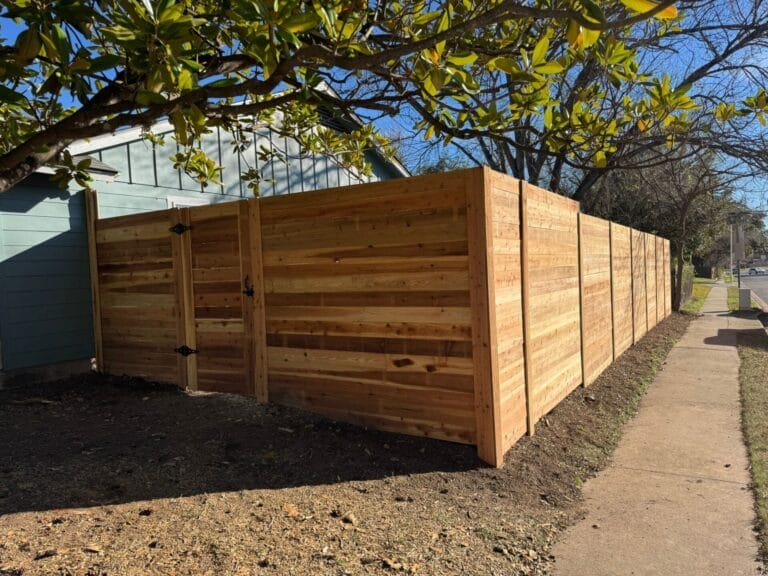
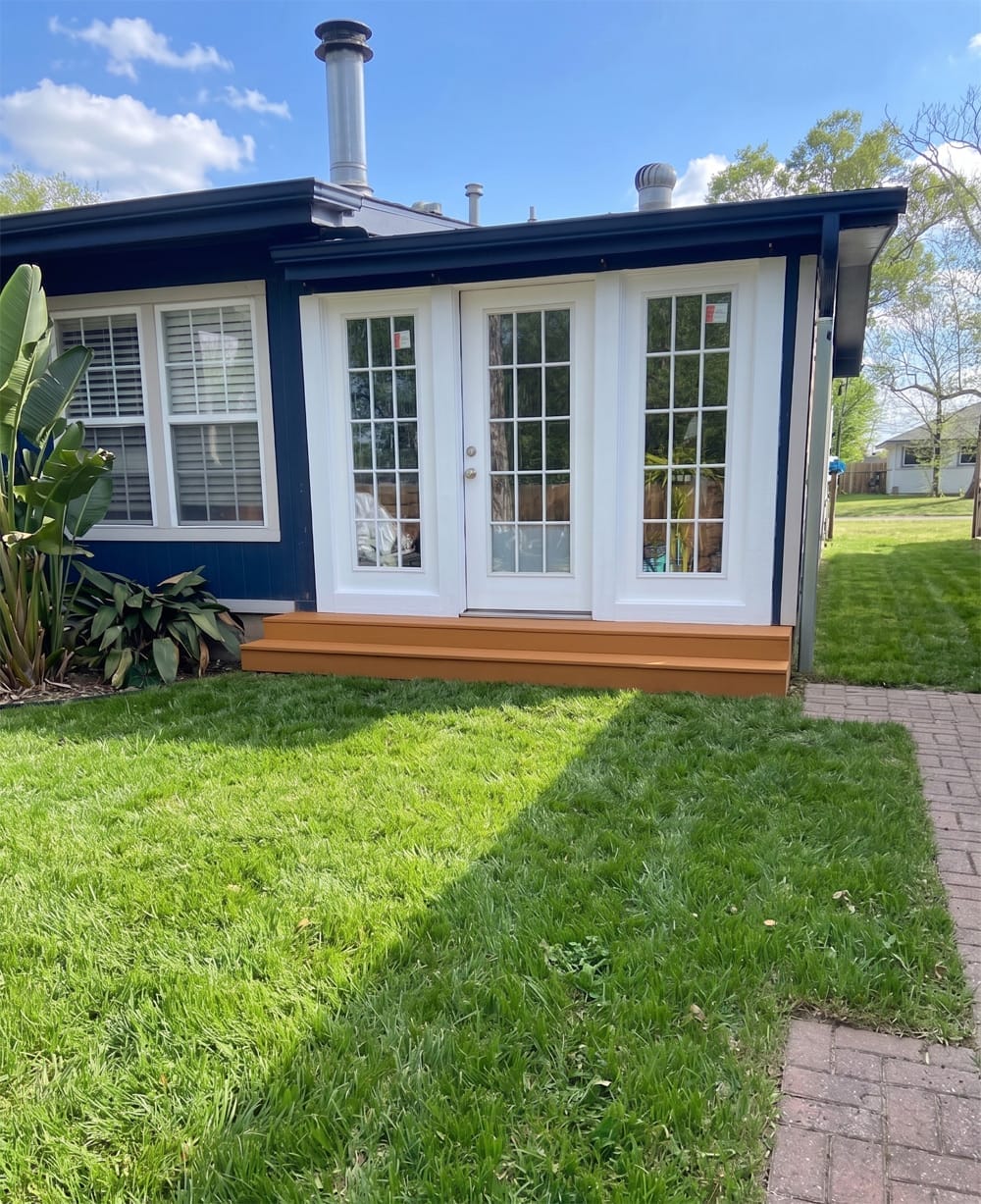
Not every backyard needs a deck. This one needed less structure, not more.
Why Remove a Deck Instead of Rebuilding
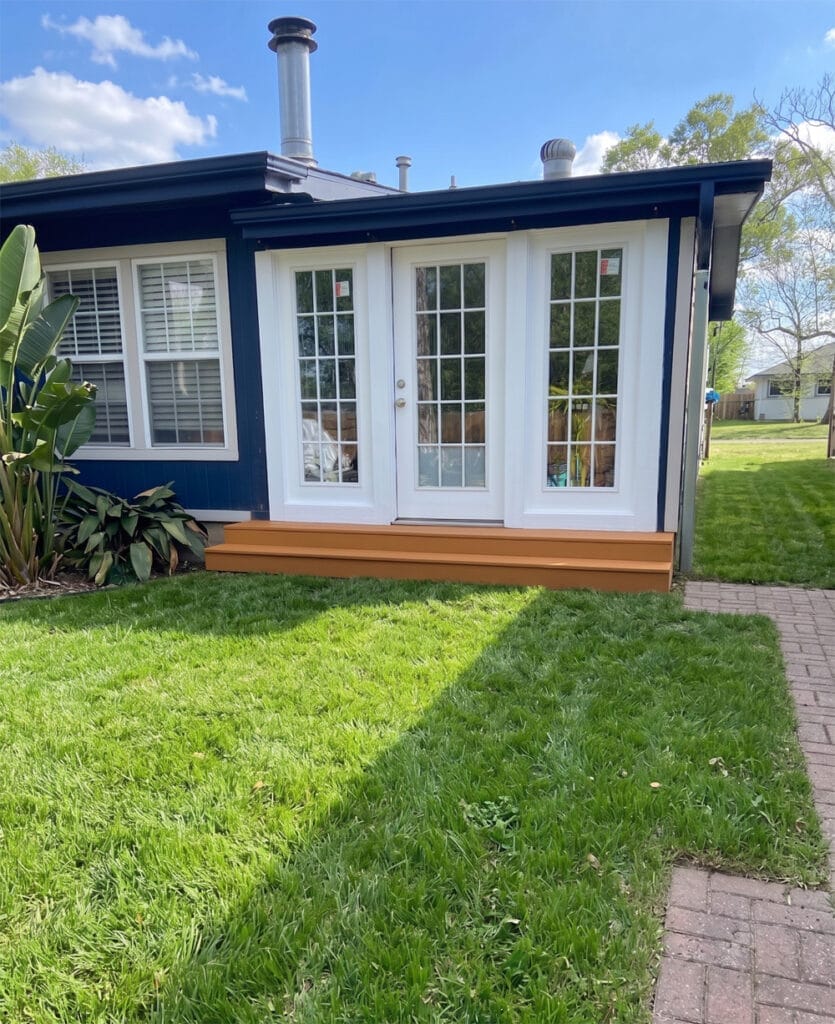
Removing the deck opened up the yard and made the transition from inside to outside feel natural. The new pressure-treated lumber steps lead straight from the door to ground level. No railing needed, no elevation change to work around. The composite fascia board across the front gives the steps a finished look and holds up better than bare wood in Austin weather.
The door and sidelight installation ties the whole thing together. From inside, you can see the full backyard through the glass. From the outside, the doors and steps read as one clean entry point instead of a deck you have to climb up to.
When to Remove vs. Rebuild
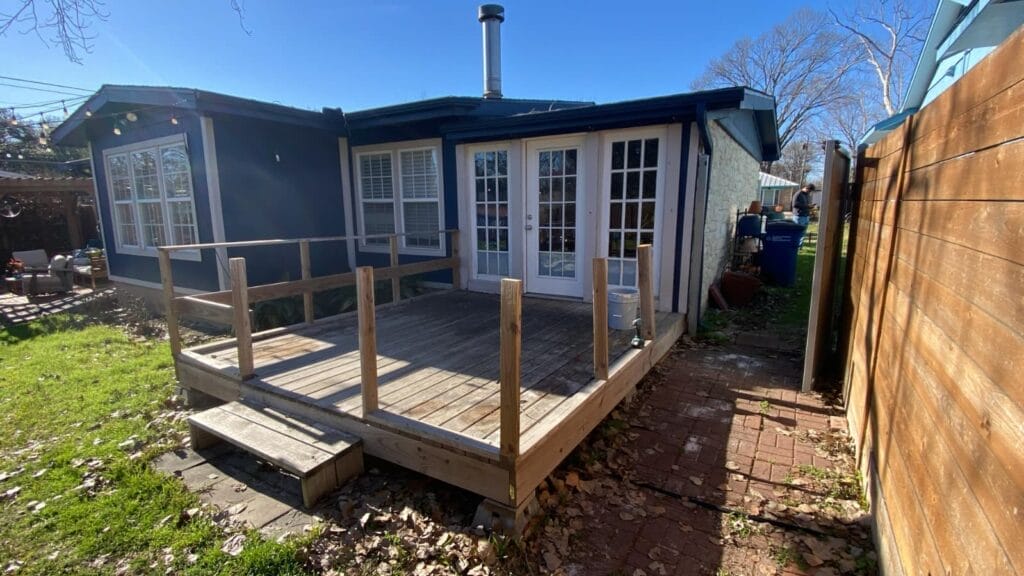
An old deck that’s rotting, too high, or in the wrong spot doesn’t always need to be replaced with another deck. Sometimes the better move is to step back and ask what the yard actually needs.
If the deck blocks light, takes up usable yard space, or sits empty most of the year, removal might make more sense than a rebuild. A set of steps and a good door can give you better access to the yard with less maintenance and less material cost.
Ready to talk about your deck or outdoor project? Call us at (512) 761-7336 or reach out online for a free estimate. We build custom decks, patios, and outdoor living spaces across Austin and the surrounding area.
Frequently Asked Questions
How much does it cost to remove a deck in Austin? It depends on the size, height, and how it’s attached to the house. A small elevated deck like this one is a one-day teardown. We provide line-item estimates so you know what you’re paying for before we start.
Do I need a permit to remove a deck? Demolition of an existing deck typically doesn’t require a permit in Austin. If you’re building new steps or modifying the structure where it meets the house, you may need one depending on the scope. We handle permitting when it’s needed.
Can you replace a deck with just steps? Yes. If you don’t need the elevated surface, steps are a simpler, lower-maintenance option. Pressure-treated lumber handles Austin weather well, and a composite fascia board on the front keeps the finished edge looking clean longer than bare wood.
What’s the difference between composite and pressure-treated lumber? Pressure-treated lumber is real wood treated to resist rot and insects. It’s strong, affordable, and takes paint or stain well. Composite is a manufactured material that doesn’t need finishing but costs more upfront. This project used PT lumber for the structure with a composite fascia for the visible front edge.
Planning an Outdoor Project?
Decks, patios, outdoor kitchens, fences — tell us what you're thinking and we'll give you a clear estimate. No pressure.
Or call us at (512) 761-7336